
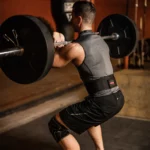
Choosing the right orthopedic belts and braces in Pakistan prevents minor joint instability from turning into a chronic ligament tear or herniated spinal disc. In 2026, medical-grade orthopedic belts and braces at Afifa Surgical (Fatima Center, 14-A Queens Road, Lahore) range from PKR 650 for elastic wrist and ankle compression wraps to PKR 1,800 to PKR 4,500 for contoured lumbosacral back belts and hinged knee braces, and up to PKR 8,500+ for post-operative ROM knee immobilizers and Taylor spinal braces.

4 Core Types of Orthopedic Belts & Braces and Their Clinical Indications
An elastic sleeve that works for mild gym soreness will fail completely if used on an unstable ACL tear or acute sciatica. Match your symptoms to the correct structural brace level below:
| Orthopedic Support Category | Structural Mechanism | Primary Clinical Indications | 2026 Price Range at Afifa Surgical (PKR) |
|---|---|---|---|
| Lumbosacral Back Belts & Spinal Corsets | Contoured aluminum or flexible steel posterior stays + dual-pull elastic compression straps | L4-L5 / L5-S1 disc bulge, sciatica, postural lower back strain, heavy lifting protection | PKR 1,650 to 4,800 |
| Knee Braces (Compression, Patellar & Hinged) | Silicone patellar ring + medial/lateral polycentric aluminum hinges or 3-panel immobilizer splints | Osteoarthritis, ACL/MCL ligament sprains, meniscus injury, patellar tracking disorder | PKR 1,200 to 7,500 |
| Wrist Splints & Thumb Spica Braces | Removable palmar aluminum spoon splint keeping the wrist in neutral 15-degree extension | Carpal tunnel syndrome, De Quervain’s tenosynovitis, distal radius fracture recovery | PKR 750 to 2,200 |
| Ankle Stabilizers & Figure-8 Braces | Crisscross figure-8 non-stretch nylon straps + malleable side stays | Grade I to II lateral ankle inversion sprains, chronic ankle instability, sports protection | PKR 850 to 2,800 |
How to Choose the Right Level of Support
1. Level 1: Mild Compression & Proprioceptive Sleeves
Four-way stretch knitted elastic or breathable neoprene sleeves provide gentle warmth and hydrostatic compression. They do not mechanically block joint movement; instead, they reduce mild swelling and heighten your brain’s awareness of joint position during walking or light exercise.
2. Level 2: Semi-Rigid Strapped & Hinged Supports
When a ligament is sprained or a lumbar disc is irritated, soft fabric alone is not enough. Level 2 braces incorporate medial/lateral aluminum hinges (such as our Elastic Hinged Knee Brace) or contoured posterior spinal stays that permit normal forward bending while blocking harmful side-to-side shear or hyperextension.
3. Level 3: Rigid Post-Operative Immobilizers
Immediately after ligament reconstruction surgery, patellar dislocation, or stable fracture casting removal, rigid 3-panel knee immobilizers, ROM dial braces, and Taylor thoracolumbar braces lock the joint within a strict clinician-set angle so healing bone and tendon grafts are never overloaded.
4 Clinical Rules for Wearing Orthopedic Belts & Braces Safely
- Never Wear a Lumbar Back Belt 24/7 (Prevent Core Muscle Atrophy): A back belt is an active support tool for sitting at a desk, driving over bumpy roads, or lifting loads. Wearing a tight lumbar corset all day and night causes your deep transverse abdominis and multifidus muscles to switch off and weaken. Always remove your back belt when lying flat in bed unless explicitly instructed otherwise by a spine surgeon.
- pass the Two-Finger Circulation Check: When fastening Velcro straps on a knee, wrist, or ankle brace, you should be able to slide two fingers comfortably under the top strap. Tingling toes, cold fingers, or bluish skin means the strap is cutting off venous return.
- Center the Patellar Cutout & Hinge Axis: On an open-patella hinged knee brace, align the circular ring directly around the kneecap and ensure the side hinge joints sit level with the middle of the kneecap. A brace that slides down onto the shin acts as a tourniquet rather than a joint stabilizer.
- Hand-Wash in Cool Water & Air-Dry Flat: Sweat and skin salts degrade elastic lycra fibers and cause contact dermatitis. Remove any metal stays if detachable, hand-wash the brace in cool water with mild soap, and dry flat in the shade (never wring or iron neoprene or elastic supports).
Frequently Asked Questions
1. Is it safe to sleep while wearing a back belt or knee brace?
Unless you are wearing a prescribed night splint (such as a carpal tunnel wrist splint or a post-operative fracture immobilizer ordered by your orthopedic surgeon), remove standard lumbar back belts and compression knee sleeves before going to sleep so tissues receive unrestricted overnight circulation.
2. How do I measure my size for a lumbar back belt or knee brace?
For a lumbar back belt, measure your waist circumference right around the navel (belly button) rather than going by your trouser size. For a knee brace, measure the circumference of your thigh 4 to 5 inches above the center of the kneecap while standing with your leg slightly bent.
3. How often should an orthopedic belt or elastic brace be replaced?
With daily clinical use and weekly hand-washing, elastic compression straps and Velcro hook-and-loop closures typically maintain optimal tension for 6 to 9 months. Once the elastic stretches out without rebounding, replace the brace to maintain proper joint stabilization.
4. Where can I get fitted for orthopedic belts and braces in Lahore?
Visit Afifa Surgical, Fatima Center, 14-A Queens Road, Lahore (open 9:00 AM to 11:00 PM) for in-person sizing, browse our Belts and Braces catalog online, or message us on WhatsApp at +92 334 4052948 (sales@afifasurgical.com) for fast Cash on Delivery across Pakistan.