
A blood pressure reading that sits 12 mmHg too high can push a patient onto unnecessary medication. A reading that sits 12 mmHg too low can mask dangerous hypertension until a stroke hits. Choosing the best blood pressure apparatus in Pakistan is never about grabbing the cheapest box on a pharmacy shelf; it comes down to cuff fit, calibration stability, and whether the person taking the reading knows how to use a stethoscope.
At Afifa Surgical (Fatima Center, 14-A Queens Road, Lahore), we test and supply clinical BP apparatus and blood pressure monitors to hospital wards, OPD doctors, and families managing hypertension at home. In 2026, dependable units in Pakistan cost between PKR 2,200 for manual aneroid kits and PKR 9,500+ for clinically validated digital upper-arm monitors.
The Three Types of BP Apparatus Sold in Pakistan
Every blood pressure machine falls into one of three mechanical families. Each one solves a different clinical problem, and each one fails in a specific way if misused.
| Apparatus Type | Typical 2026 Price (PKR) | Accuracy & Calibration | Best Suited For | Main Drawback |
|---|---|---|---|---|
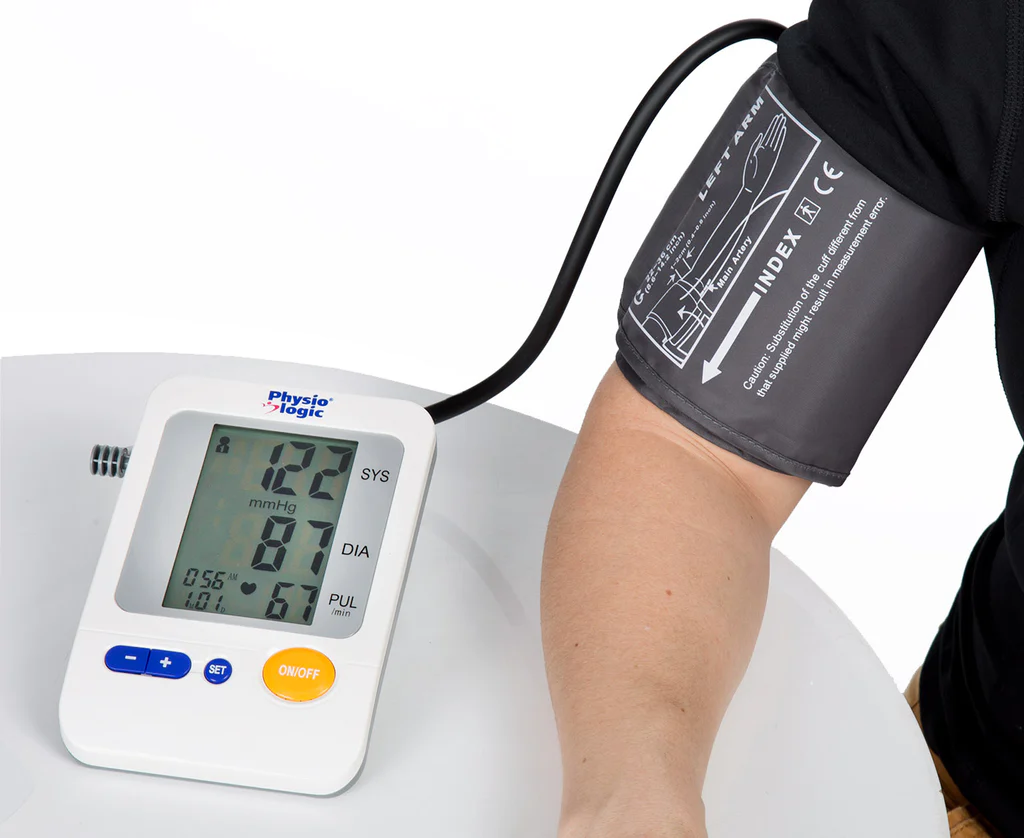
| Automatic Digital (Upper Arm) | PKR 2,800 to 9,500 | High when clinically validated and cuff matches arm size | Home patients, elderly parents, solo self-monitoring | Sensitive to arm movement, arrhythmia, and weak batteries |
| Desk / Stand Mercurial | PKR 3,800 to 7,500 | Gold standard for auscultatory readings; rarely drifts | Hospital OPDs, clinics, doctors trained in Korotkoff sounds | Glass tube can break; mercury spill hazard; requires stethoscope |
| Handheld Aneroid (Dial) | PKR 2,200 to 4,800 | Accurate when new; needs zero-check every 6 to 12 months | Medical students, house officers, emergency bags, field visits | Internal spring loses calibration if dropped on hard tiles |
Skip wrist-style digital monitors unless a patient’s upper arm is too large or injured for a standard brachial cuff. Even a two-inch vertical tilt at the wrist shifts systolic pressure by 8 to 10 mmHg because of hydrostatic pressure. Upper-arm cuffs eliminate that error almost completely.
Digital BP Monitors for Home Use: What Actually Matters
Most families in Lahore, Karachi, and Islamabad buy a digital monitor for parents over 50. The best-selling brands at our showroom include Certeza, Believia, and Omron. Ignore flashy Bluetooth apps if the core hardware lacks these four features:
- Wide-Range Upper-Arm Cuff (22 to 42 cm): Standard 22 to 32 cm cuffs run tight on heavier adult arms. A cuff that is too small artificially inflates systolic readings by 10 to 20 mmHg.
- Irregular Heartbeat (IHB) Indicator: If a patient has atrial fibrillation or frequent premature beats, oscillometric sensors can misread pulse waves. An IHB icon alerts you to repeat the measurement manually.
- Dual Power (AA Batteries + USB-C or AC Adapter): Half-dead alkaline batteries cause slow cuff inflation and error codes (Err 1 or Err 3). Running the unit on a regulated adapter at home keeps pump speed steady and cuts battery costs.
- Multi-Reading Memory with Average Function: Cardiologists prefer the average of two or three readings taken one minute apart rather than a single isolated spike.
A unit like the Believia Digital Blood Pressure Monitor covers daily home tracking cleanly at PKR 2,800, while Certeza upper-arm models add larger backlit displays for elderly users with weak eyesight.
Mercurial vs. Aneroid Apparatus for Doctors and Medical Students
Ask any senior consultant in a Pakistani teaching hospital which device sits on their desk, and nine times out of ten they still trust a Yamasu desk mercurial BP apparatus paired with a clean acoustic stethoscope. Gravity never loses calibration. As long as the mercury meniscus sits cleanly at zero before inflation and the rubber air valve holds pressure without leaking, a mercurial column stays accurate for a decade.
The catch is portability. You cannot carry a 1.5-kilogram desk mercurial unit inside a lab coat pocket during morning ward rounds. That is where a handheld aneroid sphygmomanometer earns its keep. Medical students and house officers carry aneroid gauges clipped to the cuff because they weigh less than 300 grams and fit inside a doctor examination bag.
Here is the maintenance habit every aneroid owner needs: check the needle before every ward week. When the cuff lies flat and completely deflated on a table, the needle must rest squarely inside the small zero box at the bottom of the dial. If it sits outside that box after a fall onto hospital marble, the internal bellows has bent and the unit needs recalibration or replacement.
Why Your Home Readings Differ From Your Doctor’s Clinic
Customers walk into our Queens Road showroom every week convinced their new digital monitor is broken because it read 128/82 at home while their doctor’s clinic recorded 148/94 an hour earlier. In most cases, both machines are working fine.
White-coat effect raises blood pressure in roughly 15% to 20% of adults the moment they sit in a crowded OPD. Beyond anxiety, small posture mistakes swing numbers far more than people realize:
- Unsupported arm hanging down: Adds 6 to 10 mmHg to systolic pressure. Rest the forearm flat on a table at heart level.
- Crossed legs during measurement: Raises systolic pressure by 2 to 8 mmHg. Keep both feet flat on the floor.
- Full bladder: Adds up to 10 to 15 mmHg. Empty your bladder five minutes before sitting down.
- Measuring over thick winter sleeves: Rolls fabric into a tourniquet and blocks arterial vibrations. Always wrap the cuff directly over bare skin.
- Talking or scrolling a phone: Even calm conversation bumps readings up by 5 to 10 mmHg.
Step-by-Step Clinical Protocol for Accurate Readings
Follow the same five-minute sequence every morning and evening so your doctor gets clean trend data instead of random noise.
- Sit quietly for 5 minutes: Avoid tea, coffee, smoking, or brisk walking for at least 30 minutes beforehand. Sit with your back supported against a chair.
- Position the cuff properly: Wrap the cuff snugly around your bare upper arm, placing its lower edge 2 cm (roughly two finger widths) above the elbow crease. Align the artery marker tube directly over the inner brachial artery.
- Support the arm at heart level: Place your arm palm-up on a desk or cushion so the middle of the cuff aligns with the center of your chest.
- Take two readings 60 seconds apart: Write down both numbers with the date and time, or save them to the device memory. If the two systolic numbers differ by more than 10 mmHg, take a third reading and average the last two.
Checking Spare Parts and Warranty Before Buying in Pakistan
A BP monitor is only as reliable as its rubber bladder and Velcro cuff. After 12 to 18 months of daily use, Velcro loses grip or the latex inflation bulb develops pinhole cracks. Buying an unbranded imported unit from a random marketplace listing often leaves you stuck with a dead machine because replacement cuffs do not fit its proprietary air plug.
Stick to brands with local parts availability in Lahore and Karachi: Certeza, Yamasu, Believia, and Medico. Standard Luer-lock and universal tubing connectors let you swap a worn-out cuff or inflation bulb in two minutes for a few hundred rupees instead of throwing away the whole unit.
Simple Rule for Picking Your Exact Unit
If you are buying for parents or solo home tracking, choose a clinically validated upper-arm digital monitor with a 22 to 42 cm wide cuff and adapter support. If you are a medical student or clinic doctor doing auscultatory exams, keep a Yamasu mercurial unit on your OPD desk and a calibrated aneroid gauge in your ward bag. Explore our full BP Apparatus catalog online, visit Afifa Surgical at Fatima Center, 14-A Queens Road, Lahore, or message us on WhatsApp at +92 334 4052948 for same-day Lahore delivery and nationwide COD.