
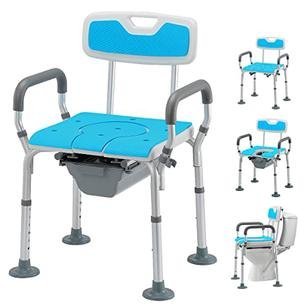
Selecting the best commode chair in Pakistan comes down to matching the frame architecture to the patient’s daily bathroom routine: does the chair stay beside the bed for nighttime use, fold into a car trunk for travel, or roll directly into a wet bathroom shower stall? At Afifa Surgical (Fatima Center, 14-A Queens Road, Lahore), we stock six clinical categories of commode chairs built for post-operative patients, stroke survivors, and elderly family members.

6 Types of Commode Chairs Available in Pakistan & Their Specific Uses
Not every commode chair works in every home layout. Compare the structural design, frame material, and ideal patient profile for each of the six types below:
| Commode Chair Type | Key Structural Feature | Ideal Patient & Room Setup | Where It Excels |
|---|---|---|---|
| 1. Bedside Stationary Commode | Fixed or pin-adjustable steel frame, non-slip rubber leg tips, lidded bucket | Elderly or post-surgery patients who can stand and pivot 2 steps from the bed | Rock-solid stability next to the mattress for nighttime toileting |
| 2. Folding Portable Commode | Side cross-braces fold flat to 4 inches thick without tools | Small bedrooms, apartments, and families traveling between cities | Stores behind a bedroom door or slides into any hatchback car boot |
| 3. Shower & Wet-Room Commode | 100% anodized aluminum or stainless steel tubing with waterproof PU seat | Patients needing seated bathing inside wet Pakistani washrooms | Zero frame rust even under daily direct showerhead spray |
| 4. Drop-Arm Transfer Commode | Armrests unlatch and swing downward flush with the seat level | Paraplegic, hemiplegic (stroke), or hip-replacement patients | Allows smooth lateral sliding from a wheelchair or bed without lifting legs |
| 5. Rolling Wheeled Commode | Four 3-to-5 inch swivel caster wheels with rear foot-lock brakes and footrests | Patients who cannot walk from the bedroom to the washroom | Doubles as an indoor transfer chair and rolls directly over a standard WC bowl |
| 6. Heavy-Duty Bariatric Commode | Reinforced gusseted steel tubing with a 22-to-24 inch wide seating area | Patients weighing between 115 kg and 200 kg | Eliminates hip pinching and lateral frame flexing under heavy load |
7 Clinical Features to Inspect Before You Buy
1. Multi-Pin Height Adjustability (17 to 22 Inches)
A seat that sits too low forces painful knee flexion in osteoarthritic or post-total-knee-replacement (TKR) patients. Look for push-pin telescoping legs with 5 to 7 height notches so you can set the seat slightly higher than knee level, making standing up effortless.
2. High-Density Padded PU vs Hard Molded Plastic Seats
Hard blow-molded plastic seats are easy to hose down, but frail elderly patients with bony prominences bruise quickly on hard rims. A sealed, seam-free polyurethane (PU) cushioned seat provides soft pressure relief without absorbing moisture or odors.
3. Deep Lidded Bucket with Metal Carry Handle
Shallow 4-liter bowls splash during removal. Always verify that the commode includes a deep 7-to-10 liter slide-out pail with a tight-fitting odor-seal lid and a balanced wire bail handle.
4. Splash Guard for Over-the-Toilet Use
When using a bedside commode as a raised seat over an existing western flush toilet, removing the bucket and inserting a bottomless funnel splash guard directs waste straight into the ceramic toilet bowl without soiling the frame rails.
5. Locking Caster Brakes on Rolling Models
Never allow a patient to transfer onto a wheeled commode unless at least two (and ideally all four) caster wheels have positive step-on locks engaged. Unlocked wheels roll backward the moment the patient’s weight touches the front edge of the seat.
6. Textured Non-Slip Armrest Grips
Patients push down hard on both armrests to lever themselves upright. Ribbed PVC or high-friction foam armrest pads keep wet or sweaty hands from slipping forward during the stand-up phase.
7. Wide-Base Anti-Tip Footprint
Inspect the stance of the four legs: a slight outward splay at the bottom of the legs widens the center of gravity, preventing the chair from tipping sideways if a patient leans heavily to one side.
Daily Cleaning & Disinfection Protocol
- Empty Immediately & Pre-Line the Pail: Line the clean bucket with a disposable commode bag or add 150 ml of water with hospital disinfectant before use so waste never sticks to the plastic base.
- Wash the Pail with Detergent & Hypochlorite: After emptying into the main toilet, rinse with warm soapy water and disinfect with a 1:10 diluted household bleach solution.
- Sanitize High-Touch Contact Points: Wipe the armrests, backrest, and seat underside daily with a 70% alcohol or quaternary ammonium disinfectant cloth, then dry thoroughly.
Frequently Asked Questions
1. Can I use a regular bedside commode chair inside the shower?
Standard powder-coated steel commode chairs should be kept in dry bedrooms because daily shower water will eventually rust the interior pin holes. For bathing, always choose an anodized aluminum or stainless steel shower commode chair.
2. Which commode chair is best after knee replacement or hip fracture surgery?
Post-TKR and hip fracture patients need a height-adjustable bedside commode chair (or a drop-arm model) set 2 inches above knee height so the hip joint never bends past 90 degrees while sitting down.
3. How do I know if a commode chair will fit over my bathroom toilet?
Measure the maximum outer width and rim height of your ceramic toilet bowl from the floor, then compare it against the under-frame clearance between the commode’s left and right legs (typically 16.5 to 18 inches wide and up to 17.5 inches high).
4. Where can I inspect and order commode chairs in Lahore?
Visit Afifa Surgical, Fatima Center, 14-A Queens Road, Lahore (open 9:00 AM to 11:00 PM), browse our Commode Chairs collection online, or message us on WhatsApp at +92 334 4052948 (sales@afifasurgical.com) for same-day delivery in Lahore and nationwide Cash on Delivery.